

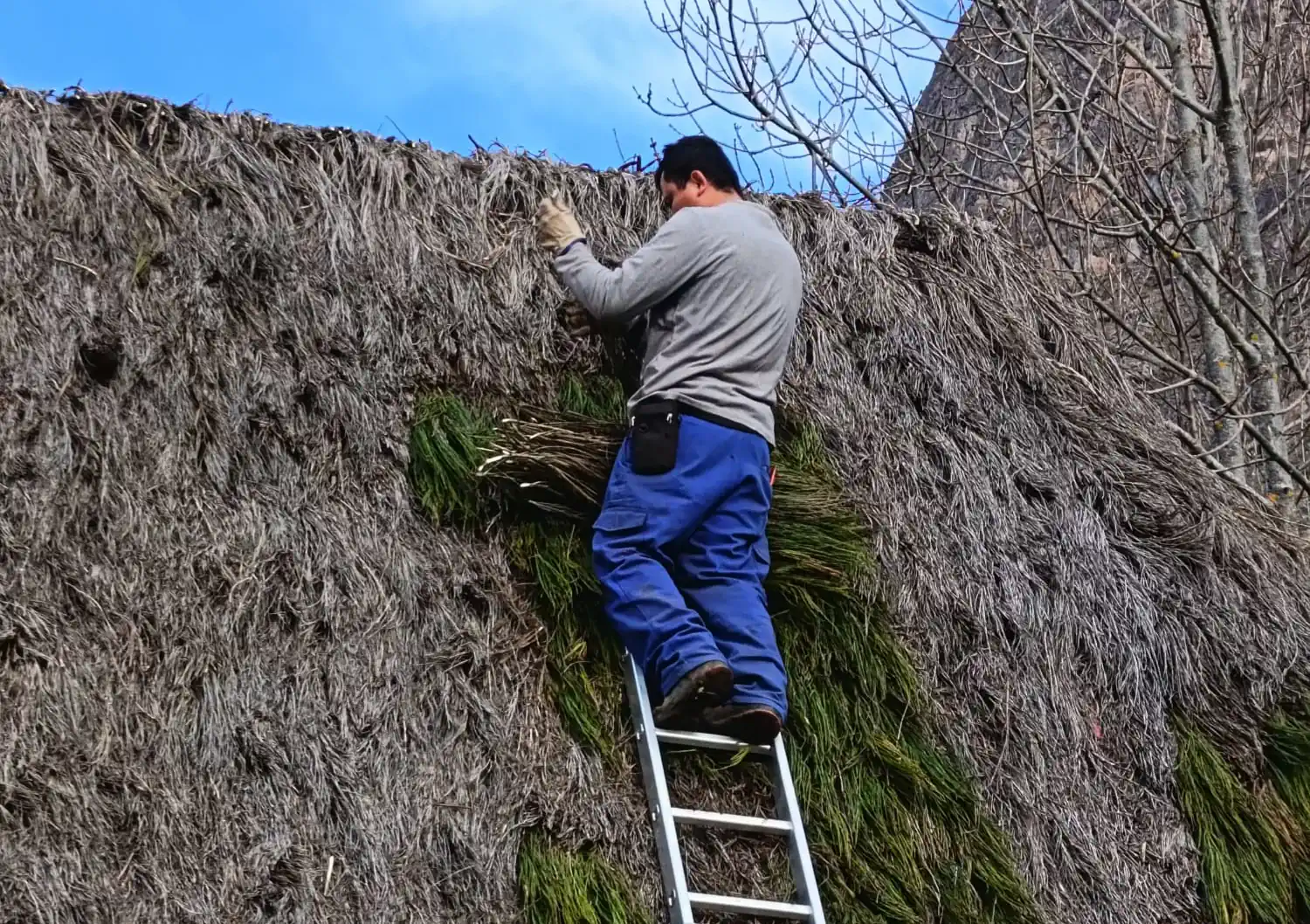
At Braña La Code, the arrival of spring marks a pivotal moment. With it—and as part of our preparations to provide the best possible experience for our visitors—the teitado begins: the renewal of the cabins’ traditional thatched roofs.
This process is more than a simple repair; it is the continuation of an ancestral craft that has shaped the landscape and culture of Somiedo for centuries.
Thatched cabins are among the most iconic ethnographic symbols of the Somiedo Natural Park.
These buildings are closely connected to transhumance and the use of high mountain pastures. Traditionally, they served as stables on the ground floor and haylofts beneath the roof, sometimes with a small space reserved for the shepherd.
Their design reflects vernacular wisdom: stone masonry walls supporting a timber framework.
On top rests the vegetal roof, primarily made from broom or retama (Cytisus scoparius). The entire structure is secured with rods, plant-fiber ropes, and bindings that hold each bundle firmly in place. The ridge is reinforced to resist the strong mountain winds.
The steep, four-sided pitch of the roof is no aesthetic whim. Its sharp angle allows rainwater to drain quickly and prevents snow from accumulating during the harsh winters.
Its qualities go even further: the slope and the thick vegetal layer provide superb thermal insulation, keeping the interior cool in summer and warm in winter.
Furthermore, the combination of stone and thatch—crafted entirely from locally sourced materials—allows the cabins to blend naturally and harmoniously into their surroundings.
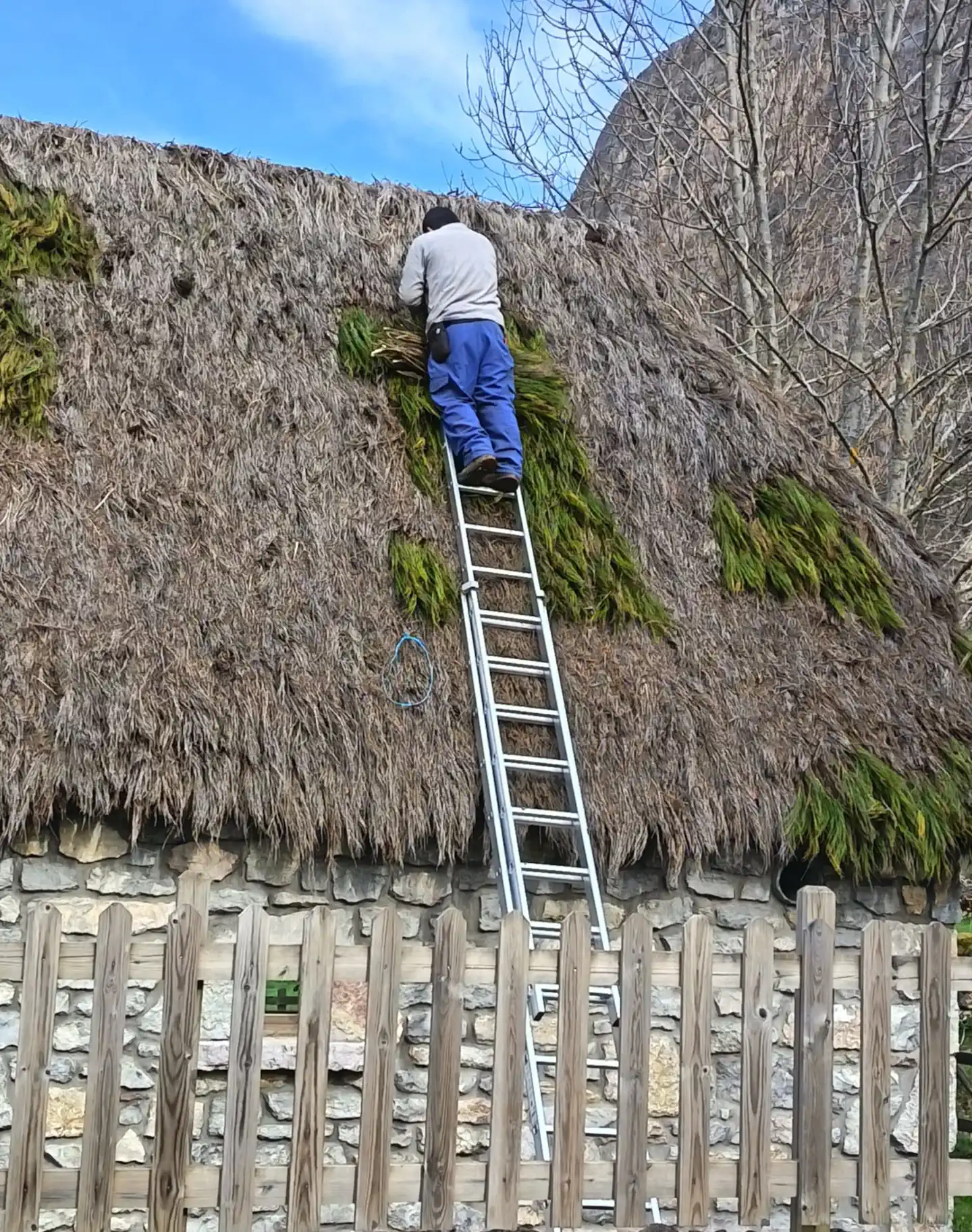
Renewing a thatched roof is a deeply artisanal process, following methods passed down through generations.
It all begins with cutting and selecting the broom at just the right time, usually outside of its flowering period.
The bundles are laid from the eaves up to the ridge, each row overlapping the previous one to ensure full waterproofing. Finally, the ridge is finished and secured with rods and bindings, forming a compact and uniform surface.
This work requires deep expertise and is carried out with great care, ensuring the roof can withstand another year of mountain weather.
The teitado is much more than roof maintenance. It embodies three essential values: its heritage and ethnographic importance, keeping alive the traditional architecture that defines Somiedo’s identity; the preservation of traditional techniques and craftsmanship, safeguarding knowledge that forms part of the region’s intangible heritage; and its environmental value, through the use of natural, renewable, locally sourced materials—proving that tradition and sustainability can go hand in hand.
This is the work we undertake every spring at Cabañas de Teito Braña la Code, caring for our six cabins with the respect due to a centuries-old legacy, and sharing it with those who wish to experience Somiedo in its most authentic form.